
Your browser is not supported or up-to-date. try updating it, or else download and install the latest version of Microsoft Edge.
upgrade


There are few illnesses that attract as much judgment as addiction.
People living with substance use disorders are often described as having “brought it on themselves” or making “bad choices.” Their illness is too frequently framed as a moral failure rather than what modern medicine, neuroscience, and psychiatry have repeatedly demonstrated it to be: a chronic, treatable health condition.
Yet there is a striking inconsistency in how we speak about disease.
Many of our most common chronic illnesses—including type 2 diabetes, hypertension, cardiovascular disease, chronic lung disease, and obesity—are influenced, to varying degrees, by lifestyle choices and environmental factors. We acknowledge these realities without stripping people of their dignity. We encourage treatment. We provide education. We offer support and rehabilitation. We recognize that human behaviour is complex and that health is shaped by genetics, trauma, social circumstances, stress, and access to care.
Why, then, do we treat addiction so differently?
The answer lies not in the science, but in stigma.
Stigma changes the language we use. It changes how families respond. It influences public policy, affects healthcare delivery, discourages people from seeking help, and can leave individuals believing they are beyond hope or undeserving of compassion.
The consequences are profound. Shame delays treatment. Judgment isolates people. Discrimination becomes another barrier to recovery.
The truth is that addiction changes the brain. Like other chronic illnesses, it affects how people think, feel, make decisions, and regulate behaviour. Recovery is rarely a matter of simply “trying harder.” It requires evidence-based treatment, skilled professionals, supportive families, meaningful opportunities, and communities that believe recovery is possible.
The same principles apply across the spectrum of mental illness.
Whether someone is living with depression, bipolar disorder, schizophrenia, anxiety, or a substance use disorder, they deserve to be seen first as a person—not as a diagnosis. They deserve hope instead of labels, treatment instead of blame, and understanding instead of exclusion.
Every one of us has the power to reduce stigma through the words we choose. Instead of asking, “What’s wrong with you?” we can ask, “What happened to you?” Instead of saying someone is “an addict,” we can speak of “a person living with a substance use disorder.” These are not merely semantic differences; they reflect a fundamental shift from judgment to humanity.
At Poinciana Rehabilitation Centre, we believe recovery begins with dignity. Every person who enters our doors has strengths, potential, and the capacity for growth. Through compassionate, evidence-based care and psychiatric rehabilitation, we work alongside individuals to help them rediscover purpose, rebuild relationships, and reclaim fulfilling lives.
Reducing stigma is not simply the responsibility of healthcare professionals. It belongs to families, employers, educators, policymakers, the media, and every member of our community.
Changing the conversation changes lives.
The next time we are tempted to describe addiction as “self-inflicted,” it is worth asking ourselves a simple question:
Would we use the same language for someone living with heart disease, diabetes, or another chronic illness?
If the answer is no, then perhaps the problem has never been the illness.
Perhaps the problem has always been the stigma.
It is time to replace judgment with understanding, blame with compassion, and silence with hope.
Because every person deserves the opportunity to recover—and every person deserves dignity.
Mental Health in the Cayman Islands: Understanding the Trends, Embracing Hope
Mental health is everyone’s business. As our Cayman Islands continue to grow and evolve, so too does the need for compassionate, accessible and evidence-based mental health care. The encouraging news is that more people than ever are seeking help, reflecting greater awareness, reduced stigma and a growing recognition that mental health is just as important as physical health.
A Growing Community, A Growing Need
Over the past two decades, the Cayman Islands has experienced remarkable population growth, increasing from approximately 37,000 residents in 1997 to more than 63,000 by 2018—a rise of over 70%. As our community has expanded, so has the demand for mental health services.
Between 2019 and 2021 alone, more than 36,000 people accessed mental health services across the Cayman Islands, representing a 21% increase in service utilization. By 2022, reporting facilities documented 12,660 individual patients and more than 53,000 clinical encounters, highlighting the growing importance of mental health care within our healthcare system.
What Are We Seeing?
Mental health trends in the Cayman Islands mirror those observed internationally.
Some of the most significant findings include:
- Anxiety disorders have become the most frequently reported mental health condition, surpassing depression.
- Young people have shown the greatest increase in accessing services, demonstrating both increasing need and improved willingness to seek help.
- Suicide attempts increased significantly in 2021, emphasizing the importance of early intervention, community awareness and accessible crisis support.
- Individuals aged 25–44 years continue to represent the largest group seeking treatment, followed closely by children and adolescents.
These statistics should not simply concern us—they should motivate us. Every number represents a person, a family and a story of resilience.
Recovery Is Possible
Mental illness is not a personal weakness, character flaw or failure. Like diabetes, heart disease or asthma, mental health conditions are medical conditions that respond best to early identification, evidence-based treatment and ongoing support.
Recovery does not always mean the complete absence of symptoms. Rather, recovery means helping individuals regain purpose, independence, meaningful relationships and a satisfying quality of life despite the challenges they may face.
This philosophy lies at the heart of Psychosocial Rehabilitation (PSR).
The Role of the Poinciana Rehabilitation Centre
The Poinciana Rehabilitation Centre (PRC) was established to provide specialized, recovery-oriented care for persons living with severe and persistent mental illness.
Our model is built on the internationally recognized principles of Psychosocial Rehabilitation, which focuses on helping individuals develop the skills, confidence and supports needed to live meaningful lives within their communities.
At PRC we believe every person has strengths, abilities and the capacity for growth.
Our multidisciplinary team works alongside residents to promote:
- Independent living skills
- Social and relationship development
- Education and vocational readiness
- Physical health and wellness
- Emotional resilience
- Recovery through dignity, purpose and hope
Recovery is not simply about reducing symptoms—it is about rebuilding lives.
The Community Has an Essential Role
Mental health care does not begin and end in hospitals or rehabilitation centres.
Communities are where recovery truly happens.
Every employer who offers someone a second chance…
Every neighbour who reaches out…
Every family member who chooses understanding over judgment…
Every volunteer who gives their time…
Every business that supports mental health initiatives…
…becomes part of someone’s recovery journey.
Research consistently demonstrates that strong social connections, meaningful employment, supportive relationships and community participation improve recovery outcomes while reducing relapse, hospitalization and social isolation.
When we invest in mental health, everyone benefits.
Healthier individuals create healthier families.
Healthier families build stronger communities.
Stronger communities create a more resilient Cayman Islands.
Together We Can Make a Difference
At PRC, we envision a Cayman Islands where every person experiencing mental illness is treated with dignity, compassion and hope.
We invite members of our community to become partners in this mission by:
- Learning more about mental health.
- Challenging stigma whenever you encounter it.
- Supporting individuals in recovery.
- Volunteering your time or expertise.
- Partnering with PRC through employment opportunities, educational programmes and community activities.
- Encouraging those who are struggling to seek help early.
Mental health recovery is not achieved by healthcare professionals alone.
It is achieved when an entire community believes that every person deserves the opportunity to recover, contribute and thrive.
Together, we are building a stronger, healthier and more compassionate Cayman Islands—one person, one family and one act of kindness at a time.
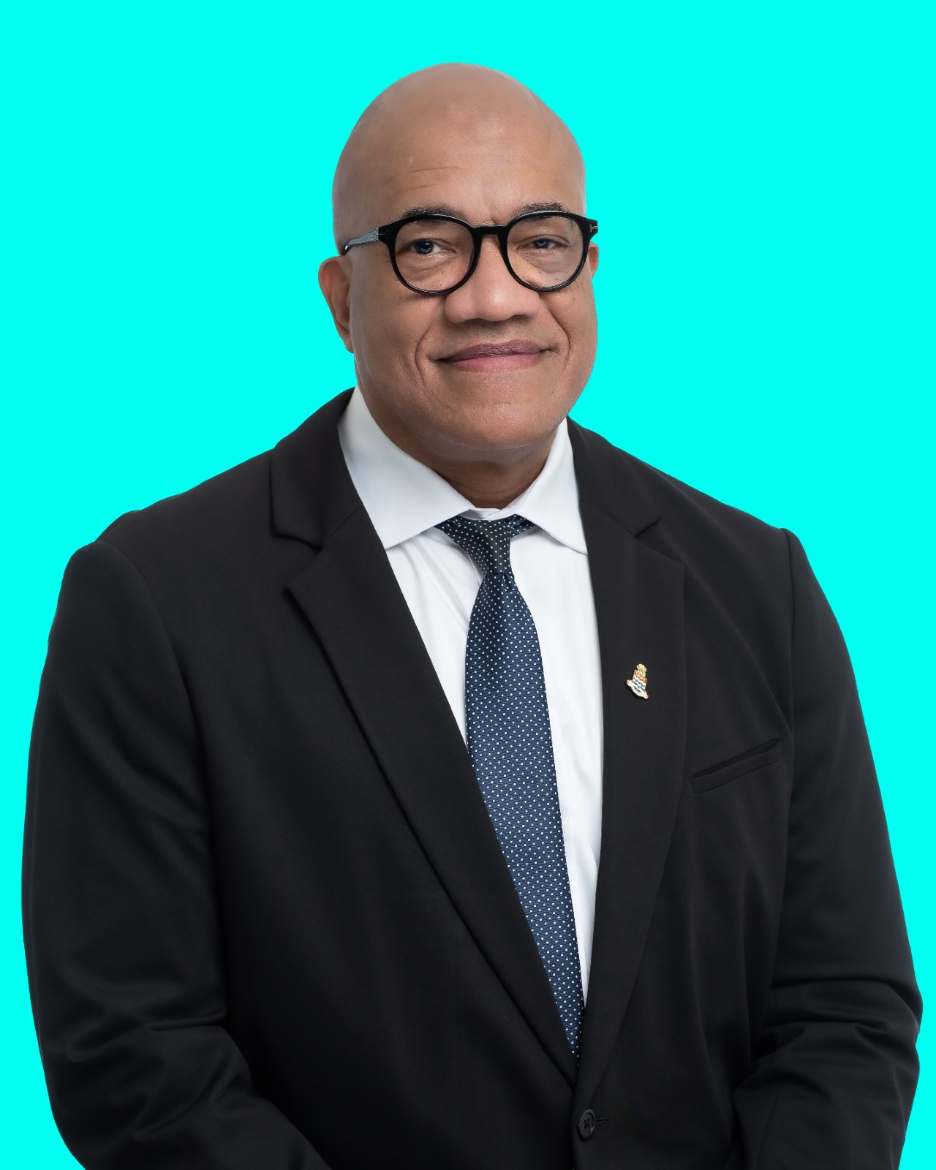
Dr. Marc Lockhart, MD
Consulting Psychiatrist & Clinical Director, Poinciana Rehabilitation Centre